
- The Contractor Problem Nobody Wants to Admit
- What Prequalification Checks — And What It Misses
- Five Signs a Contractor Is Operating Outside Your System
- What It Costs When Contractor Safety Breaks Down
- How to Build a Contractor Control System That Works
- What Ongoing Verification Looks Like in Practice
- Your Next Step
- Summary
- Frequently Asked Questions
- Sources and Citations
- Image Credits
- Kellie Rose Ryder
- Related Posts
- Leave A Comment Cancel reply
TL;DR
Prequalification checks credentials. It does not check what a crew does on your site once the paperwork is filed. This article covers five warning signs contractor safety is breaking down in real time, what it costs when it does, and how to build a practical verification system that closes the gap — before an incident closes it for you.
The Contractor Problem Nobody Wants to Admit
Picture a Monday morning on an active site. A subcontractor crew arrives. Their prequalification package is clean. Insurance is current. COR is valid. The onboarding form is signed.
By Thursday, a worker on that crew is hurt.
The investigation finds the crew had been working without a valid permit for two days. The foreman had performed the task at dozens of other sites and knew the procedure by memory. Nobody on your team had walked that area since Tuesday.
The prequalification did everything it was supposed to do. It just did not protect anyone by Thursday.
This is not an unusual outcome. Under Alberta’s OHS Act, prime contractors are legally responsible for ensuring that all employers on a work site comply with OHS legislation. That responsibility does not transfer when you hand someone an onboarding form.
The gap between what a contractor promises in prequalification and what they do on your site is one of the most common — and most costly — exposures in multi-employer operations. And most of the time, it is invisible until it is not.
This is the conformance gap at the contractor level. If you have not read the full breakdown of compliance vs. conformance, it is covered in depth in Why Your Safety Program Passes Audits but Still Puts Workers at Risk. The contractor problem is one of the most consistent places where that gap shows up.
What Prequalification Checks — And What It Misses
Prequalification is a filter. It is not a guarantee.
It answers one question: is this contractor acceptable to bring on site based on their history and documentation? That is a useful question. But it is not the only question that matters.
Prequalification checks the contractor’s past. You are responsible for their present.
Recent Canadian research has shown that TRIR — the metric most commonly used in contractor prequalification scoring — does not reliably predict future safety performance. A contractor with a clean record can still have workers who skip permit steps, arrive late to toolbox talks, or bring JSAs written for a different site entirely.
The document says safe. The site tells a different story.
Here is where the gap lives:
| What Prequalification Covers | What Prequalification Misses |
|---|---|
| Insurance certificates and liability coverage | On-site behavior and daily work practices |
| COR, SECOR, or equivalent certification | Whether the crew adapts JSAs to your site conditions |
| TRIR and past injury statistics | Permit compliance and approval timing |
| Written safety program on file | PPE adherence when no supervisor is present |
| Training records and certifications | Toolbox talk attendance and actual engagement |
| Past regulatory violations or charges | Emergency coordination with your site plan |
The left column tells you who to let in. The right column tells you what can still go wrong after you do.
Five Signs a Contractor Is Operating Outside Your System
Walk any busy multi-employer site and these signs are visible — if you know what to look for.
Sign 1 — They Arrive with a Generic JSA and Never Adapt It
A subcontractor crew shows up with a job safety analysis from a previous project. The hazards are different. The site layout is different. The tasks have changed. But the form is the same — filled in, signed, filed. Nobody reviews it against your actual site conditions, and nobody asks them to.
A JSA that does not reflect the current site is not a safety tool. It is a filing requirement.
Sign 2 — They Show Up After Your Toolbox Talk. Repeatedly.
The toolbox talk starts at 7 a.m. The subcontractor crew arrives at 7:20. They had a long drive. They will catch it tomorrow. Wednesday the same thing happens. By Friday, that crew has missed four out of five daily safety briefings. No record exists of any of it.
A crew that is not in the briefing is a crew that does not know what changed on site overnight, what the day’s permit conditions are, or what the weather hazard is. Showing up late is not a scheduling issue. It is a system gap.

Sign 3 — PPE Is Inconsistent and Nobody Enforces It
Your site standard requires hard hats, safety glasses, and high-visibility vests in all work areas at all times. Most of the subcontractor crew complies. Two workers do not — repeatedly. The site supervisor sees it. The subcontractor foreman is managing a deadline. Nothing is said.
The day something happens to one of those two workers, the question will not be why they were not wearing their PPE. The question will be why nobody enforced it.
Sign 4 — Permits Are Signed Before the Verification Walk Is Done
The permit-to-work process exists. The form is familiar. But on a busy Tuesday, the subcontractor foreman signs the permit and starts work 20 minutes before the verification walk is complete. They have done this task before. Nothing has ever gone wrong. The permit is being treated as paperwork, not as a control.
That is the exact moment the control stops controlling anything.
Sign 5 — Nobody Knows Who the Emergency Contact Is
Ask three workers from the subcontractor crew who to call in a site emergency. If each one points somewhere different — or reaches for a phone to find out — your emergency coordination is not integrated. Two plans exist on your site. Neither one has been tested as one system.
An emergency response that has not been practiced together is not a response. It is a hope.
What It Costs When Contractor Safety Breaks Down
The legal exposure arrives first.
Under Alberta’s OHS Act, the prime contractor is responsible for establishing a system that ensures compliance by all employers on the site — including every subcontractor. Failure to do that is not just a procedural gap. It is a chargeable offense.
Alberta’s published OHS charges and administrative penalties include multiple prime contractors penalized specifically for failing to establish contractor compliance systems on their sites. Penalties have ranged from a few thousand dollars to well over $100,000 — before legal costs, project delays, or downstream tender impacts are counted, and provincial workplace fatality statistics underscore how much is at stake industry-wide.
Beyond the regulatory exposure, contractor safety breakdowns cost in four consistent ways:

Project delays and unplanned downtime.
A subcontractor incident shuts down the whole site. Investigators arrive. Equipment gets tagged. Other crews stand down. Every hour of that shutdown has a direct cost in labor, equipment, and schedule margin.
Shared liability — even for workers you did not hire.
Even if the injured worker is not your direct employee, your organization can face regulatory charges and civil liability if it is found you did not take reasonable steps to verify contractor compliance. Handing someone an onboarding form is not sufficient under the Act.
Reputation with prime contractors and clients.
A single contractor-related incident on an otherwise clean project is often enough to affect your next prequalification score with a prime. Word travels faster than a corrective action report.
Internal culture and crew morale.
Your direct employees watch how contractor safety is handled. If a subcontractor crew is seen cutting corners with no consequence, it sends a clear signal about what is actually acceptable on your site. That signal spreads.
The gaps in contractor control are not just a safety risk. They are a legal, financial, and reputational risk — all running at the same time.
How to Build a Contractor Control System That Works
An effective contractor control system has three layers. Most organizations have the first one. Fewer have all three — and the third layer is where almost all contractor safety failures happen.
Here is what each layer covers and what it is designed to do:
| Layer | What It Covers | Goal |
|---|---|---|
| Layer 1 Filter (Pre-Mobilization) |
COR or equivalent certification, insurance, TRIR history, written safety program, training records, past regulatory violations | Determine whether the contractor is acceptable before they arrive on site |
| Layer 2 Align (Onboarding) |
Site-specific hazard orientation, permit and PPE expectations, toolbox schedule, emergency contact exchange, supervisor introductions | Set the site standard clearly before work begins — not assumed, stated |
| Layer 3 Assure (Ongoing Verification) |
Spot observations, toolbox attendance by name, permit compliance rate, corrective action tracking, joint emergency drill | Confirm the standard is being met while work is actually happening |
Most contractor safety failures happen in Layer 3 — not because organizations do not care, but because verification gets deprioritized when the project gets busy. The CCOHS contractor safety framework treats contractor management as an ongoing responsibility — not a one-time onboarding event. That distinction changes how you resource it.
As long as Layer 3 is treated as optional, Layers 1 and 2 are doing work they were never designed to do alone. This connects directly to what Alberta requires of multi-employer work sites: a system that ensures ongoing compliance — not just a system that verifies it at the start.
What Ongoing Verification Looks Like in Practice
Verification does not have to be elaborate. It has to be consistent.
Here is what it looks like when organizations get it right.
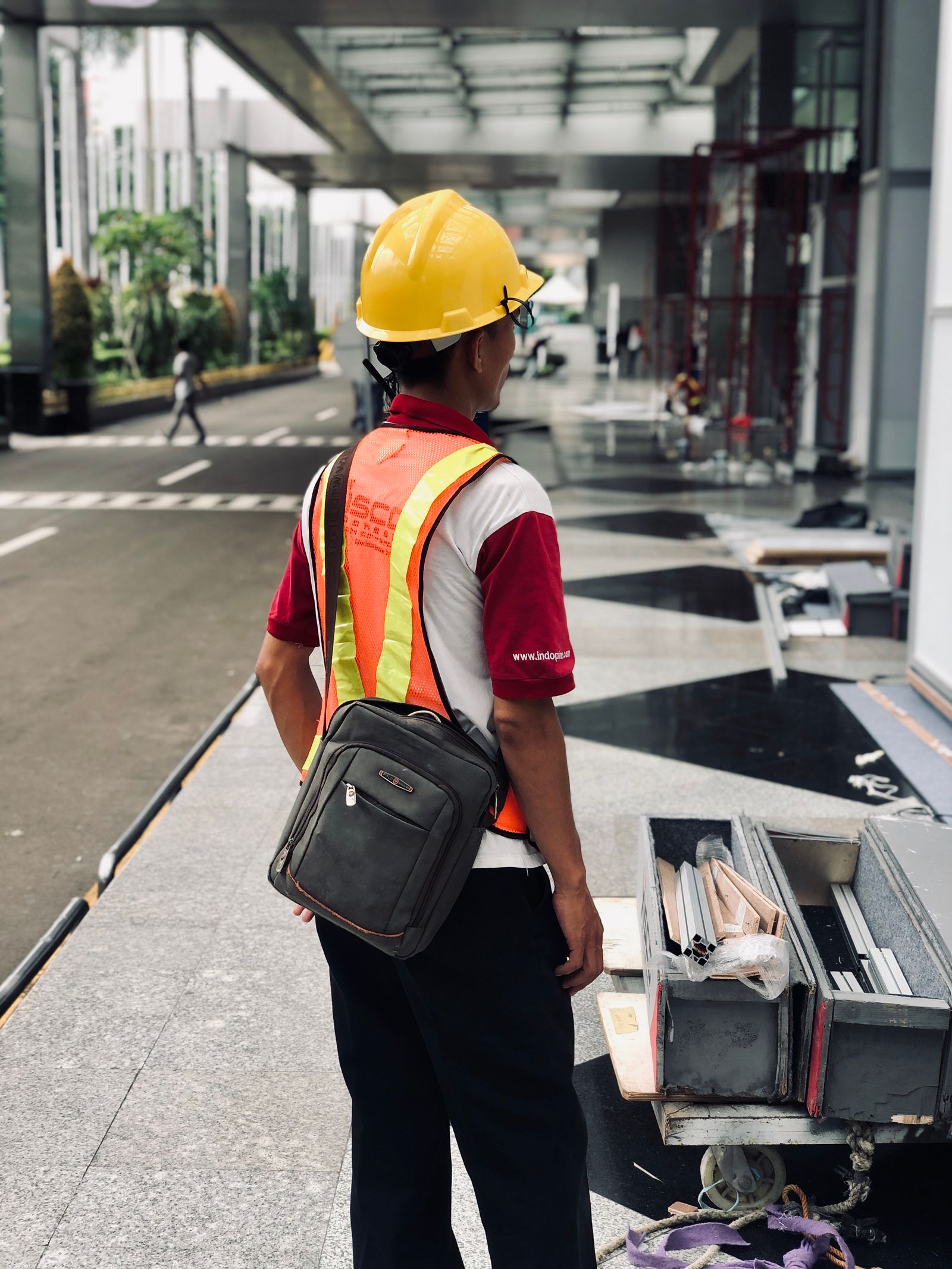
Weekly Spot Observations — Unannounced
A supervisor or safety lead spends 30 minutes per week observing subcontractor crews at work. Not scheduled. Not flagged in advance. Just present and watching. Findings are shared with the subcontractor foreman at the end of that shift — not filed in a report that sits for two weeks.
Toolbox Attendance Tracked by Name and Contractor
Attendance is recorded by individual name and contractor company — not headcount. A weekly summary shows which crews are consistently present and which are not. Two consecutive misses trigger a conversation. Not after three weeks of pattern. After two misses.
Permit Compliance Rate as a Tracked Metric
How often are permits completed correctly and on time, versus signed retroactively or skipped entirely? Tracking this by subcontractor gives you a real signal of where the system is holding and where it is not. One crew with a low compliance rate is a conversation. A pattern across multiple crews is a system problem.
Corrective Actions With Named Owners and Due Dates
When a finding is issued to a subcontractor, it has a named owner, a due date, and a close-out verification step. Not just on your inspection form — in a shared log the subcontractor foreman can see. Open items are reviewed at the weekly coordination meeting, not at the end of the project.
A Joint Emergency Drill Before the First High-Risk Task
Your emergency plan and the subcontractor’s plan should be practiced together at least once before any confined space entry, energized work, or work-at-heights task begins. If they have not, you have two plans that have never functioned as one. That is not preparation. That is paperwork.
None of this requires a dedicated safety officer for every subcontractor. It requires a consistent cadence — and the organizational commitment to protect it when the schedule gets tight.
The corrective action follow-through piece — making sure contractor findings close, not just get logged — is covered in depth in a coming article in this hub: How to Build a Corrective Action Process That Actually Closes Safety Gaps. It applies to your internal crews as much as it applies to your subcontractors.
PRO TIPS
Practical steps you can take before a formal contractor safety review:
- Build toolbox attendance into your daily site sign-in — not as a separate sheet, as part of the same form
- Create a one-page site-specific hazard brief for every subcontractor that starts work, even short-duration crews
- Add a 48-hour corrective action response requirement to your subcontractor agreements — not just a general ‘reasonable timeline’ clause
- Run a 10-minute tabletop emergency drill with subcontractor foremen before the first confined space or permit-required task
- Assign one person from your team as the contractor safety contact — a named point person, not a department
Your Next Step
Contractor conformance gaps are among the most common findings in a Fortriss AAA Safety Audit. They are also among the fastest to address once they are clearly mapped.
Most organizations already have the first layer: prequalification. The gap is almost always in the third layer — the ongoing verification that confirms what is actually happening on site.
The Fortriss AAA Safety Audit includes a full contractor safety and prequalification review as part of its 12-service-area gap map. Deliverables in 14 days. A prioritized action plan that tells you exactly where your contractor exposure sits and what to fix first.
No sales pitch. No commitment required to start.
Book a 20-minute call at fortriss.ca. Leave with two or three immediate opportunities to strengthen your contractor control system — before the next crew arrives Monday morning.
Summary
Prequalification tells you a contractor was acceptable before they arrived. It does not tell you what they are doing on your site right now.
The five signs contractor safety is breaking down in real time: generic JSAs that never get adapted, crews missing toolbox talks, inconsistent PPE with no enforcement, permits signed before verification is complete, and emergency contacts nobody can name.
The cost of contractor safety failures runs across four areas: regulatory fines and charges under the OHS Act, shared liability exposure, reputation with prime contractors and clients, and internal culture damage that spreads to your own crews.
An effective contractor control system has three layers — prequalification, onboarding, and ongoing verification. Most failures happen in the third layer, not because organizations do not care, but because verification gets dropped when the schedule gets tight.
At Fortriss, contractor safety and prequalification is one of the 12 service areas we review in every AAA Safety Audit. The gap between what a contractor promises and what they do on site is one of the most preventable exposures in operations today.
Frequently Asked Questions
What is the prime contractor’s legal responsibility for subcontractor safety in Alberta?
Under Section 10 of Alberta’s OHS Act, the prime contractor is responsible for establishing a system that ensures all employers on the site comply with OHS legislation. That includes subcontractors. Signing an onboarding form does not transfer that responsibility. Failure to establish and maintain the compliance system is a chargeable offense.
Does prequalifying a contractor protect my organization from liability?
Prequalification reduces risk. It does not eliminate liability. If an incident occurs and it is found that your organization did not take reasonable steps to verify ongoing compliance on site, regulatory charges can still follow — even if the injured worker was not your direct employee. Prequalification is the filter. Ongoing verification is the protection.
How often should I conduct spot observations on subcontractor crews?
At minimum, once per week per active subcontractor crew. For high-risk tasks such as confined space entry, permit-required work, or work at heights, observations should happen at the start of each task cycle — not just once per week. The goal is not to catch people out. It is to confirm the system is working and to address gaps before they compound.
What should a site-specific contractor onboarding package include?
At minimum: a site-specific hazard overview, permit-to-work and LOTO expectations, PPE standards for this site, toolbox talk schedule and sign-in process, emergency response contacts and muster point, supervisor introductions, and a clear statement of what happens when a non-compliance is found. Generic onboarding packages are a compliance record. Site-specific ones are an actual control.
What is the most common contractor safety gap found in a safety assessment?
The most consistent gap is in Layer 3 — ongoing verification. Most organizations have a prequalification process and some form of onboarding. Very few have a consistent, documented system for verifying contractor behavior while work is happening. Toolbox attendance goes untracked. Permit compliance is not measured. Corrective actions issued to subcontractors go unfollowed. Those gaps are where incidents build.
How does Fortriss approach contractor safety in its AAA Safety Audit?
Contractor safety and prequalification is one of the 12 service areas covered in the Fortriss AAA Safety Audit. The review compares your prequalification criteria, onboarding content, and on-site verification practices against both the requirements of the OHS Act and what is actually happening on your sites. Findings are prioritized by risk and built into a 90-day action plan.
Sources and Citations
- Government of Alberta — Obligations of Work Site Parties. Prime contractor responsibilities and legal duties under the OHS Act. https://www.alberta.ca/obligations-work-site-parties
- Government of Alberta — Health and Safety Program (Multi-Employer Sites). Prime contractor duty to establish compliance systems for multi-employer work sites. https://www.alberta.ca/health-safety-program
- Government of Alberta — OHS Administrative Penalties. Real penalty examples including prime contractor failures, 2024–2025. https://www.alberta.ca/ohs-administrative-penalties
- CCOHS — Contractor Health and Safety. Framework for contractor safety management as an ongoing program responsibility. https://www.ccohs.ca/products/courses/contractor_safety
- The Safety Magazine — Compliance Alone Isn’t Enough to Prevent Contractor Fatalities. Recent Canadian research on TRIR limitations and contractor safety performance gaps. thesafetymag.com
- Alberta WCB — 2024 Workplace Fatality Statistics. Provincial fatality data and industry sector breakdown. open.alberta.ca
- Fortriss Safety Solutions — AAA Safety Audit. Compliance to Conformance assessment, alignment, and assurance methodology. fortriss.ca
All external links verified as of May 2025. Alberta government sources are updated continuously.
Image Credits
- Hero image: Photo by shraga kopstein on Unsplash
- Image 2 (contractor safety checklist): Photo by RDNE Stock project on Pexels
- Image 3 (permit-to-work signing): Photo by Thirdman on Pexels
- Image 4 (site spot observation): Photo by Andrie Yansen Tumewu on Pexels
Kellie Rose Ryder
Founder and CEO, Fortriss Safety Solutions Inc.
Kellie Rose Ryder is an occupational health, safety, and environmental systems professional focused on closing the gap between written requirements and how work is performed in the field. As the founder and CEO of Fortriss Safety Solutions Inc., she helps organizations build practical safety systems that protect workers, support compliance, and hold up under real operating conditions. (LinkedIn)
Her work connects assessments, procedures, training, contractor controls, field verification, and ongoing performance measurement. Through Fortriss, Kellie helps employers identify hidden safety gaps, turn findings into clear actions, and create systems aligned with standards such as COR, ISO 45001, CSA, and applicable NFPA requirements. (Fortriss Safety Solutions)
Kellie’s approach is direct and practical: safety should do more than satisfy paperwork requirements. It should guide daily decisions, strengthen workplace culture, reduce operational risk, and provide reliable evidence that people and processes are protected. (Fortriss Safety Solutions)

Leave A Comment