

Safety gap analysis: How to find what your audits miss
The quick answer: A safety gap analysis compares your current controls against a recognized standard to find what is missing or insufficient, while a standard audit only confirms whether existing controls are being followed. This article covers how gap analysis differs from audits, who should lead it, what components and data sources it requires, how to scope and prioritize findings, and how to verify closure beyond documentation.
TL;DR: A safety gap analysis finds the controls your audits confirm but never tested against actual hazard exposure.
How a safety gap analysis differs from a standard audit
What Is a Safety Gap Analysis and Why Does It Matter?
The gap: Sites that run active operations without a structured gap analysis have no reliable method for distinguishing controls that work from controls that look complete on paper. Supervisors manage by exception rather than by evidence, and unverified assumptions fill the space where verified controls should be.
The impact: The crew carries the exposure when an unreviewed control fails during a routine task. A supervisor approves work based on a procedure that has not been verified against current site conditions. The result is a recordable incident that a current-state review would have flagged before work began.
The action: First, define the scope by naming the operations, tasks, and hazard categories the analysis will cover. Then, compare current controls against a recognized standard to identify specific gaps, not general impressions. Finally, assign each gap a priority rating based on severity and likelihood. Managers track gap closure rate, not just gap count. Sites that skip prioritization treat every finding as equal weight, which stalls corrective action before it starts.
How Does a Gap Analysis Differ from a Standard Safety Audit?
The gap: Sites that substitute routine audits for gap analysis operate without a structured comparison between what controls exist and what controls the hazard profile actually requires. Audits confirm whether documented controls are followed. Gap analysis determines whether those controls are sufficient.
The impact: A compliance-based audit confirms that a lockout procedure exists and crews follow it. The audit does not identify that the procedure covers only four of seven energy sources on the same equipment. Under OSHA 29 CFR 1910.147, all energy sources on a piece of equipment must be addressed in the lockout/tagout procedure. A crew member initiates a changeover on an unaddressed energy source, and an uncontrolled release causes a recordable injury.
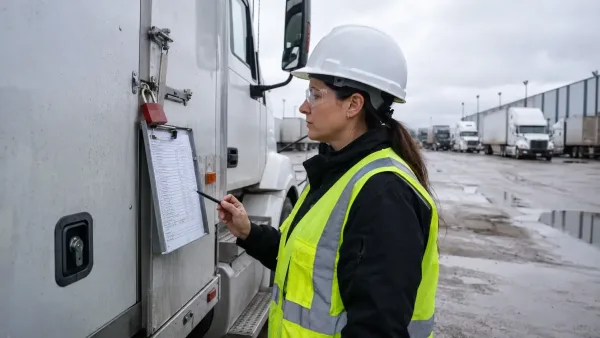
The action: First, use the audit to verify procedural compliance. Then, run the gap analysis to evaluate whether the full set of required controls is present, current, and matched to actual site hazards. Finally, document findings from both processes in a single corrective action register so nothing is tracked in isolation. Supervisors treat a clean audit as a starting point, not a finish line. Sites that conflate the two processes consistently miss systemic gaps that line-item audit checks cannot surface.
What Triggers a Safety Gap Analysis?
The gap: Operations that wait for an incident before initiating a gap analysis respond to harm rather than preventing it. Reactive analysis identifies what failed after exposure. Proactive triggers identify the conditions that increase failure likelihood before a crew encounters them.
The impact: A near-miss event goes unanalyzed because no formal trigger exists for gap review below the recordable threshold. The underlying control failure remains in place. A second crew encounters the same condition, and the near-miss becomes a recordable injury that a post-near-miss analysis would have prevented.
The action: First, define a fixed set of proactive triggers: scope changes, equipment modifications, new task introductions, and near-miss events at any severity level. Then, assign a responsible role to evaluate each trigger and determine whether a gap analysis is warranted. Finally, document the trigger, the decision, and the rationale in a single log that managers review on a set schedule. Near-misses are the most consistently skipped trigger across sites. Crews report them informally, and without a formal link to gap review, the control gap stays open.
Fortriss TIp: Track gap closure rate on a weekly cadence during active corrective action periods. A gap count that holds steady for two consecutive weeks signals a resourcing or prioritization problem, not a planning one.
Who leads a gap analysis and who needs to be involved
Who Should Own and Lead a Gap Analysis?
The gap: Sites that assign gap analysis to a single HSE advisor without field input produce findings that reflect documentation review, not operational reality. The person who writes the procedure is rarely the person who performs the task under time pressure.
The impact: An HSE advisor reviews a confined space entry procedure and finds it complete against the standard. The operations supervisor knows that crews skip the attendant briefing step when entry queues build during shift change. The unreviewed skip remains in place, and the next entry event occurs without a briefing, creating an uncontrolled rescue exposure.
The action: First, assign a lead role with authority to access records, observe work, and interview crews without filtering through supervisors. Then, require direct crew input on every task category reviewed, not just supervisor sign-off. Finally, have the operations manager validate findings before the corrective action register is opened. The lead role matters less than the access and mandate. Gap analysis run without direct crew observation consistently misses the steps that look correct on paper and fail in practice.
Who Should Be Involved in a Gap Analysis to Make It Accurate and Usable?
The gap: Gap analyses conducted exclusively by HSE personnel without frontline crew input produce findings that reflect documentation review, not operational reality. Supervisors and crews see task conditions that documents do not capture, including workarounds, equipment wear states, and informal substitutions. Excluding them produces a gap analysis that is accurate on paper and inaccurate in the field.
The impact: An HSE reviewer identifies a gap based on procedure text without knowing that crews have modified the task sequence under time pressure. The corrective action closes the documented gap but does not address what actually happens during the task. The result is a completed finding on the register and an unchanged exposure in the field.
The action: First, identify the crew roles that perform each task under review and include at least one representative in the analysis session. Then, ask crew members to walk through the task as they actually perform it, not as the procedure describes it. Finally, reconcile the difference between the documented sequence and the observed sequence before assigning controls. Supervisors verify that corrective actions address the actual task sequence, not the written one. The most common source of repeat incidents is a corrective action written against a procedure that no one follows as written.
Fortriss TIp: If the lead role has to ask a supervisor before speaking directly with crew, the access structure is already compromising the findings. Establish direct crew access in writing before fieldwork begins.
Key components that make a gap analysis actionable
What Are the Core Components of an Effective Gap Analysis?
The gap: Sites that run a gap analysis without all five core components produce findings that are incomplete, unverifiable, or unactionable. The five components are: current-state documentation review, field observation, crew and supervisor interviews, hazard-control matching, and corrective action assignment. Skipping any one component creates a blind spot the others cannot cover.
The impact: A site completes documentation review and hazard-control matching but skips field observation. The review confirms that fall protection procedures exist. Field observation would have identified that anchor points on the north roof section do not meet load requirements under OSHA 29 CFR 1926.502. A crew member uses a non-compliant anchor, and a fall arrest event results in a recordable injury and regulatory citation.
The action: First, sequence the five components in order: documentation, observation, interviews, matching, and corrective action. Then, treat each component as a verification gate before proceeding to the next. Finally, assign a named owner to each component so accountability is visible on the corrective action register. Interviews are the component most frequently shortened under time pressure. Crews hold task-level knowledge that documentation review and observation alone will not surface. Protect interview time in the schedule.
What Data Sources Should Inform a Gap Analysis?
The gap: Sites that build gap analyses from inspection records alone miss the failure patterns visible only in incident reports, near-miss logs, and training completion data. Each source reveals a different layer of control performance, and using only one produces an incomplete picture of where the system is failing.
The impact: A gap analysis built on inspections identifies physical condition failures. It does not identify that a required training module has a low completion rate among the crew performing the task. A crew member with incomplete training performs a high-risk task. The gap analysis rated that control as adequate because the inspection checklist had no training verification item.
The action: First, pull data from four sources before beginning analysis: inspection records, incident and near-miss logs, training completion records, and previous corrective action logs. Then, cross-reference findings across sources to identify where multiple data points point to the same control failure. Finally, weight gaps that appear across more than one source as higher priority. A gap that appears in both incident data and training records signals a systemic failure, not a one-time event. Confirm the data integration is working when the gap report cites the source for each finding, not just the finding itself.
What Evidence Do You Need Before a Gap Analysis Produces Reliable Results?
The gap: Teams that open a gap analysis without first assembling incident history, inspection records, and current procedure documents make recommendations against an incomplete operational picture. This happens most often when analysis is scheduled quickly in response to an event rather than as a planned review.
The impact: Reviewers assess conditions without knowing which failures already recurred. A gap that caused a near-miss six months earlier receives the same weight as a theoretical risk, and the repeated pattern goes unaddressed. The corrective action plan misses the highest-recurrence item because the data was never surfaced.
The action: First, pull the last twelve months of incident reports, near-miss records, and inspection findings before the review begins. Then, map those records against the procedure set to identify where documented controls and actual events do not align. Finally, use that alignment check as the starting point for field verification. Sites frequently have incident data stored across separate systems that no single reviewer has combined. Assign one person to consolidate the evidence set before analysis begins, and confirm completeness before fieldwork starts.

Fortriss TIp: Schedule crew interviews at the start of the shift, not the end. End-of-shift interviews consistently produce shorter responses and higher rates of omission because fatigue compresses what crews are willing to surface.
Reactive vs. proactive gap analysis: choosing the right approach
Reactive vs. Proactive: Which Approach Fits Your Operation?
The gap: Operations that trigger gap reviews only after incidents respond to failure rather than prevent it. This reactive posture is common on sites where production pressure compresses planning time, and HSE reviews compete directly with operational deadlines for attention and resources.
The impact: A supervisor relying on incident data to identify gaps receives information only after a crew member absorbs the exposure. A near-miss that goes unreported removes the trigger entirely. The gap persists, the control stays absent, and the next exposure event finds the same unprotected condition.
The action: First, establish a proactive review schedule tied to operational triggers: new tasks, changed procedures, new equipment, or workforce changes. Then run reactive reviews after incidents as a supplement, not the primary method. Finally, track both review types and compare findings to confirm the proactive cycle is catching gaps the reactive cycle misses. Sites that run only reactive reviews consistently find the same gap categories repeating across audit cycles.
Document Review Versus Field Observation: What Each Method Catches and Misses
The gap: Sites that conduct gap analysis through document review alone miss the distance between written procedure and actual crew behavior. Procedures pass a document review and still fail in practice because the field condition the procedure assumed no longer exists.
The impact: A document reviewer confirms a lockout procedure is current and signed off. A crew member follows the field habit instead of the updated step because no one verified the behavior changed. An unexpected energy release injures the crew member during a routine maintenance task.
The action: First, complete the document review to establish the required standard for each control. Then, conduct structured field observations to verify crews perform each step as written under normal production conditions. Finally, record every deviation between observed behavior and documented procedure as a confirmed gap. Supervisors often identify more gaps in thirty minutes of field observation than in a full document review cycle. Observation sessions held during shift transitions and peak production periods surface the highest-frequency deviations because pressure is highest and shortcuts are most visible.
Self-Assessment Versus Independent Review: Tradeoffs for Credibility and Coverage
The gap: Operations that rely exclusively on self-assessment for gap analysis build reviews on the same blind spots that produced the gaps. Internal teams apply the same assumptions, skip the same undocumented steps, and reach the same conclusions the existing controls were designed to support.
The impact: A self-assessment confirms control adequacy in an area where the team has normalized a deviation. An independent reviewer or regulator identifies the same area as non-compliant. The site faces a citation, a corrective action, and a credibility gap with the workforce because the internal review missed what an outsider found in one walkthrough.
The action: First, use self-assessment to build familiarity with current controls and identify obvious gaps before the independent review. Then, bring an external reviewer or cross-functional team member into the highest-risk operational areas to verify findings. Finally, compare self-assessment findings against independent findings and treat every discrepancy as a gap in review methodology, not just a gap in controls. Sites tend to over-rate their own isolation and confined space controls in self-assessments. Independent reviewers surface deviations in those same controls at higher rates because they enter without the assumption that current practice is correct.
Fortriss TIp: Run a field observation during the first week after any procedure update. That window is when old habits and new requirements overlap most visibly, and deviations are easiest to catch and correct before they solidify.
Reactive vs. Proactive Gap Analysis: What Each Catches
|
Approach |
Trigger |
What It Surfaces |
Primary Limitation |
|
Reactive |
Recordable incident or regulatory citation |
Control failures after crew exposure |
Findings arrive after harm is absorbed |
|
Reactive |
Near-miss event |
Immediate control failure at task level |
Only useful if near-miss reporting is consistent |
|
Proactive |
New task or equipment introduction |
Missing controls before first crew exposure |
Requires defined trigger list and assigned reviewer |
|
Proactive |
Procedure or workforce change |
Control gaps created by the change |
Missed when change management lacks HSE integration |
|
Proactive |
Scheduled interval review |
Systemic gaps not tied to a single event |
Can normalize existing gaps if benchmarks are internal only |
Scoping a safety gap analysis so teams focus on what matters most
How Do You Scope a Gap Analysis Without Losing Depth?
The gap: Sites that scope a gap analysis by department or calendar period rather than by hazard exposure level spread review effort evenly across unequal risk. High-consequence tasks receive the same attention as low-risk administrative work, and critical gaps stay open while lower-priority areas get fully documented.
The impact: A quarterly gap review covers all departments in equal rotation. The highest-exposure tasks in energy isolation and working at height receive the same time allocation as office ergonomics. A critical gap in the height-work rescue procedure remains open for two quarters while lower-risk areas complete corrective actions on schedule.
The action: First, rank all task categories by consequence severity before scoping begins. Then, allocate review depth in proportion to that ranking: high-consequence tasks receive full field observation and crew interviews, lower-risk tasks receive documentation review only. Finally, set a maximum scope per review cycle so the team completes each review with findings that are actionable, not just voluminous. Sites consistently over-scope on the first cycle and under-deliver on corrective actions. Set the scope at a size the team can close, not the size that feels thorough.
How Do You Prioritize Findings from a Gap Analysis?
The gap: Sites that list gap analysis findings without a severity-and-likelihood matrix treat every finding as equal priority. Corrective action teams work through the list by convenience or sequence rather than by exposure level, and the highest-consequence gaps wait behind easier fixes.
The impact: A gap analysis produces 22 findings. The corrective action team closes 14 low-complexity findings in the first month. The three highest-severity gaps, including an unverified energy isolation step on a high-cycle press, remain open for 60 days. A crew member initiates a changeover before isolation is confirmed, and an unexpected machine start causes a lost-time injury.
The action: First, apply a two-axis priority rating to every finding at the time of identification: severity of potential outcome and likelihood under current controls. Then, assign corrective actions to the top-tier findings before the analysis report is finalized. Finally, require manager sign-off on any decision to delay a top-tier finding past the default 30-day closure window. High-severity findings with low implementation cost get delayed most often because they require procedure rewrites, not physical fixes. Procedure revision workload is a consistent bottleneck across sites.
What Standards or Frameworks Should Guide the Analysis?
The gap: Sites that run a gap analysis without anchoring it to a recognized standard compare current controls against internal expectations rather than against verified best practice. Internal benchmarks reflect what the site already does, which makes the gap analysis confirm existing gaps rather than surface new ones.
The impact: An internal gap review finds that 90 percent of procedures meet the site’s own documentation standard. The review does not identify that the site’s confined space entry standard is less stringent than OSHA 29 CFR 1910.146. An inspector cites three confined space violations during a scheduled audit, generating regulatory notices and a mandatory corrective action plan.
The action: First, identify the applicable regulatory standard for each task category before the review begins. For energy control, that means OSHA 29 CFR 1910.147. For confined space entry, that means OSHA 29 CFR 1910.146. For the overall safety management system structure, ANSI/ASSP Z10.0 provides the recognized framework. Then, add the relevant industry best-practice standard as a secondary benchmark where regulatory requirements set only a minimum threshold. Finally, document which standard applies to each finding so the corrective action team knows the compliance floor and the best-practice target. Sites that use only regulatory standards close findings at the minimum threshold and repeat the same gaps in the next cycle. Best-practice benchmarks break that pattern.
Fortriss TIp: Cap each review cycle at a finding count the team can close within 45 days. A backlog that exceeds capacity at the start signals a scope problem, not a workload problem.
Gap Finding Priority Matrix
|
Severity |
Likelihood Under Current Controls |
Default Closure Window |
Required Action at Assignment |
|
High |
High |
7 days |
Interim control required before corrective action closes |
|
High |
Low |
30 days |
Manager sign-off required to extend beyond 30 days |
|
Moderate |
High |
30 days |
Named owner and field verification method assigned at opening |
|
Moderate |
Low |
60 days |
Documented in corrective action register with scheduled review |
|
Low |
Low |
90 days |
Batched for next scheduled review cycle |
Gap analysis frequency: timing it to catch risk before it compounds
How Often Should a Gap Analysis Be Reviewed or Updated?
The gap: Sites that set a fixed annual review cycle for gap analysis update findings on a schedule rather than in response to the conditions that actually change hazard profiles. Workforce changes, equipment modifications, and procedural updates shift exposure between formal review cycles without triggering a reassessment.
The impact: A gap analysis completed before a process change does not reflect the controls required after it. A crew working under the updated process operates against an outdated control baseline. When an incident occurs, the gap analysis shows the operation as compliant because it was not updated to reflect the change.
The action: First, tie gap analysis review to operational triggers: any change to task, equipment, procedure, workforce composition, or regulatory requirement initiates a targeted review. Then maintain the scheduled cycle as a full-system check that confirms no trigger-based gaps were missed between intervals. Finally, assign a named role to monitor for triggers and initiate reviews within a defined window after the change. Operations that wait for the annual cycle to catch a post-change gap are running unverified controls in the interim.
How Do You Translate Gap Analysis Findings into Corrective Actions?
The gap: Sites that close the gap analysis report without linking every finding to a specific corrective action, a named owner, and a due date produce documentation that satisfies the review requirement without driving improvement. Findings without owners stay open indefinitely.
The impact: A gap analysis identifies that fall protection inspection intervals have not been updated following a change in equipment service frequency. The finding is documented. No owner is assigned. Six months later, an inspector finds three harnesses in service past their inspection date. The site receives a regulatory citation under OSHA 29 CFR 1926.502 and a mandatory corrective action plan that the internal finding would have prevented.
The action: First, convert every finding into a corrective action item before the analysis report is released. Then, assign a named owner, a due date, and a verification method to each item at the time of assignment, not after. Finally, load all items into a single corrective action register that managers review on a set cadence. The verification method is the step most consistently omitted. Owners mark items complete when the action is taken, not when the fix is confirmed to hold under operational conditions. Require a field verification step for every closure.
How Do You Know When a Gap Analysis Finding Is Closed Versus Just Documented?
The gap: Operations that mark findings closed at the point of documentation rather than verified implementation carry phantom corrections on their tracking records. This pattern appears most often when corrective action owners are also responsible for reporting their own completion.
The impact: A supervisor documents a procedural update as complete without confirming crews received the change. The next shift works under the original condition. An inspector or incident investigator later finds the documented fix and the actual practice are different, producing both a compliance gap and an unresolved hazard.

The action: First, separate the documentation step from the verification step by assigning a different role to each. Then, require the verifying supervisor to confirm the fix is present in the actual work environment, not just in the system record. Finally, track the verification date and verifier name alongside the completion date. Self-reported closure is a recognized contributor to repeat findings in consecutive audits. Use a brief field check, under one minute, that confirms the control is present and in use before the finding status changes to closed.
Fortriss TIp: Assign the trigger-monitoring role to someone outside the operational chain for the task area under review. Supervisors managing production pressure consistently delay initiating reviews on their own areas.
Frequently asked questions
What is a safety gap analysis?
A safety gap analysis compares your current controls against a recognized standard to identify what is missing or insufficient. Unlike a standard audit that confirms whether existing controls are being followed, a gap analysis tests whether those controls match the actual hazard profile and exposure on site.
How to perform a gap analysis in 5 steps?
The article lays out five core components you run in sequence: current-state documentation review, field observation, crew and supervisor interviews, hazard-control matching, and corrective action assignment. Treat each component as a verification gate and assign a named owner for each step so accountability shows up in the corrective action register.
How does a gap analysis differ from a standard safety audit?
Audits confirm documented controls are followed, while gap analysis determines whether those controls are sufficient for the hazard profile. The article’s example is a lockout procedure that crews follow, but it covers only four of seven energy sources, which an audit can miss and a gap analysis is designed to catch.
What triggers a safety gap analysis?
Use proactive triggers, not just incidents: scope changes, equipment modifications, new task introductions, and near-miss events at any severity level. The article calls out near-misses as the most consistently skipped trigger and recommends logging the trigger, the decision, and the rationale in one manager-reviewed log.
Who should lead and who should be involved in a gap analysis?
The lead needs authority to access records, observe work, and interview crews directly without filtering through supervisors. The article is clear that every task category reviewed needs direct crew input, including a walkthrough of how the task is actually performed, not how the procedure describes it.
What data sources should inform a safety gap analysis?
Pull four sources before you start: inspection records, incident and near-miss logs, training completion records, and previous corrective action logs. The article recommends weighting gaps that show up in more than one source as higher priority, and citing the source for each finding in the gap report.
How do you scope and prioritize findings so the team can close them?
Scope by consequence severity, not by department or calendar rotation: high-consequence tasks get full observation and crew interviews, while lower-risk tasks can be documentation-only. Prioritize each finding with a severity-and-likelihood rating and use the default closure windows shown in the matrix, including 7 days for high-high and manager sign-off to extend high-low past 30 days.
How do you know a gap is closed versus just documented?
Closure requires verified implementation in the actual work environment, not just an update in the system record. The article requires separating the person who documents completion from the person who verifies it, and tracking the verification date and verifier name alongside the completion date.
Key takeaways
- Understand that a clean audit result is a starting point, not a finish line, because audits verify compliance with existing controls while gap analysis determines whether those controls match the actual hazard profile.
- Recognize that excluding frontline crew from gap analysis produces findings that are accurate on paper and inaccurate in the field, because crews hold task-level knowledge that document review and observation alone cannot surface.
- Learn why scoping by department or calendar rotation instead of by consequence severity spreads review effort across unequal risk and leaves critical gaps open while lower-priority findings get closed on schedule.
- Recognize that findings without a named owner, a due date, and a field verification step produce documentation that satisfies the review requirement without closing the actual exposure.
- Understand that near-miss events are the most consistently skipped gap analysis trigger, because crews report them informally and without a formal link to gap review the underlying control failure stays open.
- Learn why self-assessment alone builds reviews on the same blind spots that produced the gaps, and why independent review of highest-risk areas should be a required step in the analysis cycle.
- Recognize that marking a finding closed at the point of documentation rather than verified implementation creates phantom corrections, and that a separate verifier confirming the control is present in the actual work environment is the step most consistently omitted.
Sources and citations
- [1] Field1st. “How to Conduct a Safety Gap Analysis Step by Step.” https://field1st.com/safety-management/safety-gap-analysis/. Accessed March 2026.
- [2] Incident Prevention. “A Targeted Approach to Safety Gap Analysis.” https://incident-prevention.com/blog/a-targeted-approach-to-safety-gap-analysis/. Accessed March 2026.
- [3] OSHA. “Worker Participation in Safety and Health.” https://www.osha.gov/worker-participation. Accessed March 2026.
- [4] SafeSite HQ. “Gap Analysis Tool: The Proactive Safety Improvement Guide.” https://safesitehq.com/gap-analysis-safety/. Accessed March 2026.
- [5] EnSafe. “Safety Gap Analyses to Reduce Incident Rates at Utilities.” https://www.ensafe.com/safety-gap-analyses-to-reduce-incident-rates-at-utilities/. Accessed March 2026.
- [6] SafetyCulture. “Compliance Gap Analysis: Step-by-Step Guide.” https://safetyculture.com/topics/gap-analysis/compliance-gap-analysis. Accessed March 2026.
- [7] Nonprofit Association of Washington. “Safety Management System Gap Analysis.” https://nonprofitwa.org/topics/safety-management-system-gap-analysis/. Accessed March 2026.
- [8] National Safety Council. “NSC NCCCO Foundation Safety Gap Analysis Tool.” https://www.nsc.org/getmedia/d1a60888-adac-499e-b975-c74c2e8b840e/gap-analysis-tool.pdf. Accessed March 2026.

Leave A Comment