Clear Answers About Workplace Safety Consulting in Alberta
Strong safety systems start with clear decisions. This page answers common questions about workplace safety assessments, audit readiness, field verification, compliance requirements, contractor controls, and ongoing support for Alberta employers.
Why These Questions Matter
Most workplace safety gaps are not obvious at first glance. An organization may have policies, records, training documents, and inspection forms in place. The harder question is whether those controls still work under real operating conditions.
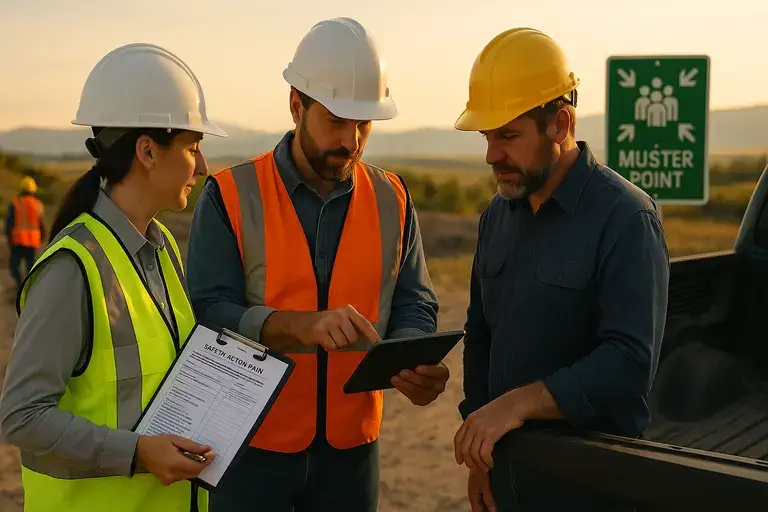
Supervisors may apply procedures differently between crews. Contractors may complete onboarding without receiving consistent field oversight. Hazard assessments may fall behind changes in the work. Corrective actions may close on paper without proving that the risk has been reduced.
The questions below help Alberta employers understand where safety consulting adds value and what a practical review should deliver.
What to Expect When You Contact Fortriss
The first step should feel practical. These answers explain how the process begins and what Fortriss needs from your organization.
What does a workplace safety consultant do?
A workplace safety consultant reviews how your health and safety system works in practice. That includes written policies, hazard assessments, training records, contractor controls, inspection processes, incident files, and field-level behaviour. The goal is not to create paperwork for its own sake. The goal is to identify where your existing system is strong, where it is exposed, and what should change first. Fortriss focuses on the gap between documented requirements and real operating conditions. That gives Alberta employers a clearer view of risk and a practical path toward safer, more consistent work.
How do we know if we need outside safety support?
Outside support is useful when the same issues continue to return, internal teams feel too close to the problem, or documentation no longer reflects the way work is performed. You may also need help before a COR, SECOR, ISO 45001, regulatory, or internal audit. Another common signal is uncertainty. If you are not confident that field practices match your written procedures, a structured review can clarify the risk. Fortriss helps you identify the right level of support without turning every concern into a large project.
What information should we prepare before the first call?
Start with a short description of your workplace, the type of work your team performs, and the issue that prompted the conversation. Helpful documents may include your safety manual, recent inspection reports, audit findings, incident summaries, contractor procedures, or a list of recurring concerns. You do not need to organize every file before reaching out. The first call is used to clarify the scope, identify the highest-priority questions, and determine which records will provide the clearest picture of your current safety system.

Start With the Gap You Can See
You do not need to know the exact service before contacting Fortriss. Most organizations begin with a concern, not a complete diagnosis.
You may be preparing for an audit. You may have recurring findings. You may be unsure whether contractors follow the right controls. Or you may simply want a second set of eyes before a small issue becomes a larger one.
The Safety Systems Checkup provides a practical starting point.
How Workplace Safety Reviews Work
A useful assessment should identify real risks, explain the evidence, and make the next steps clear.
What does a workplace safety assessment include?
The scope depends on your workplace, risk profile, and priorities. A review may include policies, procedures, hazard assessments, training records, contractor controls, inspection reports, incident files, corrective-action records, and field observations. The strongest assessments do not stop at document review. They compare written requirements with the way work is actually performed. Fortriss uses that comparison to identify priority gaps, practical quick wins, and the areas where your organization requires stronger controls or better evidence.
Can an organization pass an audit and still have safety gaps?
Yes. An audit can confirm that required documentation exists while still missing weaknesses in daily execution. Procedures may be outdated. Supervisors may use different practices between crews. Contractors may receive orientation without consistent oversight. Corrective actions may close without proving that the root cause has been addressed. This is why Fortriss focuses on compliance and conformance. Compliance confirms that the system is documented. Conformance confirms that people follow the system under real operating conditions.
What should we expect after the assessment is complete?
You should receive a clear view of the risks that matter most, the evidence behind each finding, and a practical order of priority. The next step may include a corrective-action roadmap, updated procedures, training tools, supervisor resources, contractor controls, mock audits, or ongoing field checks. The objective is not to deliver a report that sits on a shelf. The objective is to give your team a usable plan that improves safety performance and can be verified over time.
Understanding the Requirements Behind the Work
Standards matter. The stronger goal is to make the requirements usable in the field.
What is the difference between COR and SECOR?
COR and SECOR are workplace safety certification programs used by employers in Alberta. The appropriate program depends on the size and structure of the organization. Both require more than a written safety manual. Employers need evidence that their health and safety system is active, maintained, and understood by workers and supervisors. Fortriss can help review documentation, identify gaps, strengthen field controls, and prepare your organization for a more focused audit-readiness process.
How does ISO 45001 relate to workplace safety in Alberta?
ISO 45001 provides a structured framework for occupational health and safety management systems. It helps organizations define responsibilities, identify hazards, manage risks, track performance, and improve over time. Alberta employers may use the framework to strengthen internal systems, support client requirements, or prepare for certification. Fortriss can help identify the gap between your current practices and the standard, then translate those findings into practical actions that fit your workplace.
Why do field verification and evidence matter so much?
Written procedures show intent. Field verification shows whether the system works. Site observations, inspection records, training evidence, corrective-action files, supervisor checks, and audit documentation give your organization a more reliable view of performance. Evidence also helps leaders make better decisions. It shows where controls are working, where the same issue is returning, and where additional support is needed. The objective is not to collect records for their own sake. It is to prove that risk is being managed in practice.
Turning Findings Into Stronger Daily Practice
A safety review creates value when the findings lead to practical, verifiable improvement.
Can Fortriss help update policies and procedures after a review?
Yes. Assessment findings often reveal where written documents need to be updated, simplified, or connected more clearly to field-level work. Fortriss can support the development of policies, SOPs, hazard assessments, contractor controls, training tools, job aids, emergency plans, and supervisor resources. The goal is not to make the binder thicker. The goal is to make the system easier to use, easier to verify, and more reliable when operating conditions change.
How do you help supervisors apply safety requirements consistently?
Supervisors need practical tools, not vague expectations. Fortriss can help translate requirements into clear responsibilities, checklists, inspection processes, toolbox talks, coaching points, and corrective-action steps. The focus is consistency. Different crews should not receive different standards because leadership habits vary between supervisors. A stronger system makes the right behaviour easier to understand, easier to repeat, and easier to verify in the field.
What does ongoing safety support look like?
Ongoing support depends on your priorities. It may include periodic site checks, mock audits, supervisor coaching, corrective-action reviews, KPI scorecards, incident-investigation support, emergency drills, evidence-pack updates, or annual management reviews. The objective is to prevent the system from weakening after the initial work is complete. Safety requirements remain useful when they are reviewed, reinforced, and tested against real workplace conditions.
Still Have a Question About Your Safety System?
Contact Fortriss to discuss your workplace, risk profile, audit priorities, or field-verification concerns. Start with the issue you can see. We will help identify the next step.